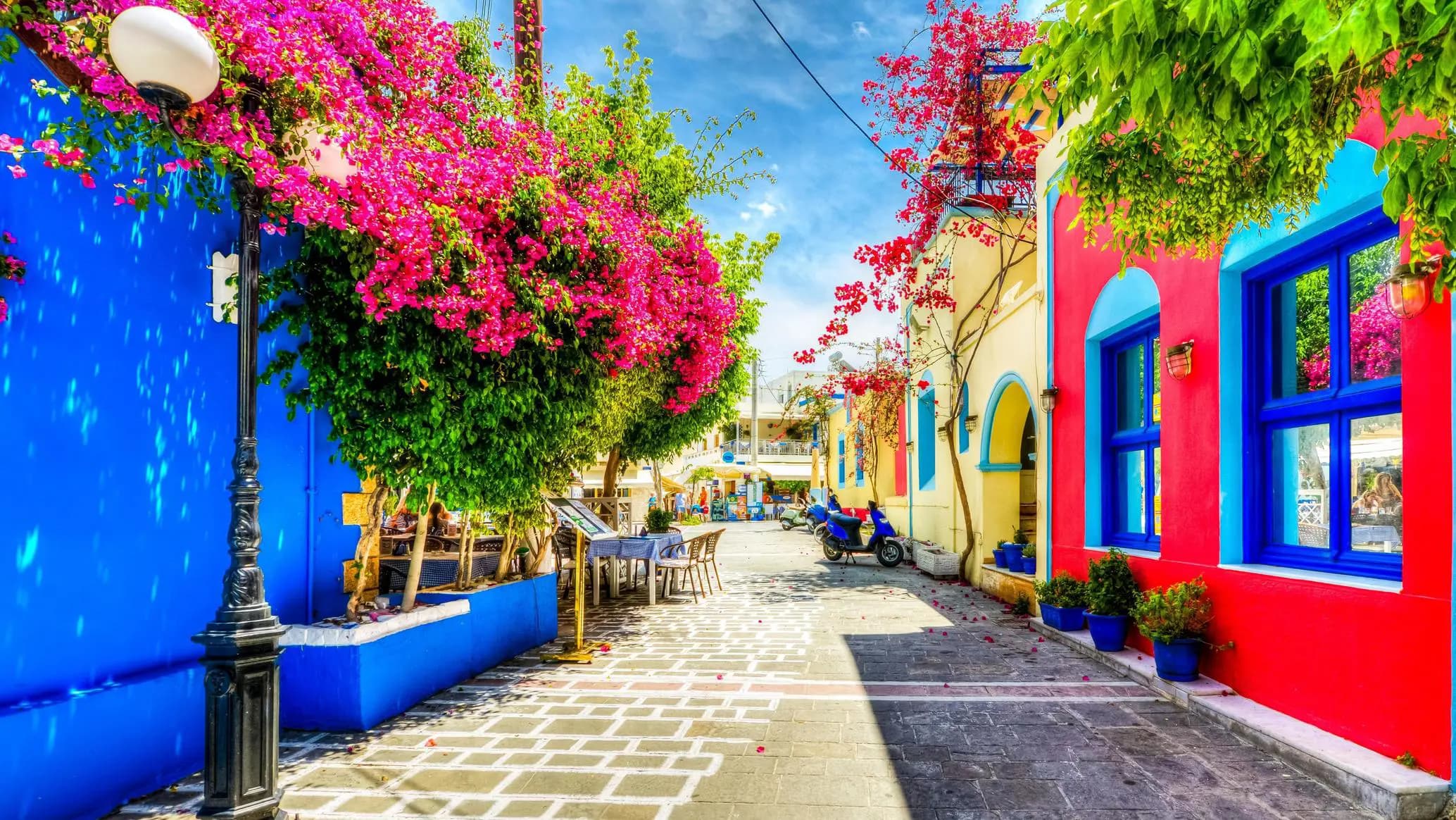
Kos
Situated directly opposite Bodrum, on the Greek side of the strait, Kos is one of the greenest and flattest islands of the Dodecanese. This island, the birthplace of Hippocrates, the father of medicine, offers a combination of long sandy beaches, the ancient temple of Asclepius (the Asklepion) and coastal paths perfect for exploring by bike. It’s just a short ferry ride from Bodrum — ancient ruins in the morning, a crystal-clear cove in the afternoon, and a sunset in the village of Zia in the evening.
Search ferries to this island
Beaches
The northern coast of Kos faces Turkey and is known for its long sandy beaches. Tigaki, one of the beaches closest to Kos town, holds Blue Flag status and, with its shallow, crystal-clear waters, is ideal for families with children. A little further west, Marmari stretches for around 3 kilometres of white sand; the breezy northern climate also makes this a favourite spot for windsurfing and kitesurfing.
Paradise Beach, considered the island’s signature spot, is notable for its golden sand and the bubbles created by natural gas sources on the seabed. Agios Stefanos, situated in the Kefalos Bay in the south-west, is one of Kos’s most photogenic spots, thanks to the islet of Kastri just offshore and the blue-and-white chapel on it.
Most of the island’s beaches are a 20–50-minute drive from Kos town and are served by regular bus services during the summer months. The flat terrain along the coast also makes it easy to cycle from beach to beach.
History and Culture
Kos is the island where Hippocrates, regarded as the father of medicine, was born in the 5th century BC. The Asklepion, situated approximately 4 kilometres south-west of the town, is an ancient temple of healing dedicated to him and is considered one of the earliest hospitals in history. The site, built on four terraces, is accessed via a wide staircase; from the upper terraces, one can see the town of Kos and Bodrum on the opposite shore.
The Hippocrates Plane Tree, standing in the city centre right next to the Knights’ Castle, has become the stuff of legend: according to legend, Hippocrates taught his students in the shade of this tree. The present-day tree is approximately 500 years old and is believed to be a descendant of that original tree.
The island offers layers upon layers of history: Neratzia (Knights’) Castle at the harbour entrance dates back to the Knights of St John; the Roman Odeon, the ancient agora and the Casa Romana in the town centre are remnants of the Roman period. They are all within walking distance of one another.
What to Do
One of the most delightful places to visit on Kos is the village of Zia. Perched on the slopes of Mount Dikeos, the village is ideal for a late afternoon stroll, with its narrow streets, craft shops and tavernas overlooking the sunset.
For a slightly different kind of seaside holiday, you could head to Therma Beach, where mineral-rich thermal waters flow directly into the sea, creating a warm natural pool. The island’s flat terrain also makes bike hire an attractive option.
Kos is a good base for boat trips to the neighbouring islands. The most popular route is to the volcanic island of Nisyros, where you can walk into the active crater; Kalymnos, known for its sponge fishing, and the small island of Pserimos are also among the day-trip options.
Best Time to Visit & Getting There
Ferry services to Kos are at their busiest between May and October. July and August are hot and busy; June and September are ideal for more moderate weather and quieter beaches. The crossing from Bodrum takes approximately 20–60 minutes, depending on the type of ferry.
Getting around the island is easy: in summer, regular bus services run between the beaches and villages, and cycling is also a practical option thanks to the flat terrain. For those wishing to explore the more remote coves and Kefalos, hiring a car is the most flexible option — you can book both the ferry and car hire in one go via TravelBeez.